17 Nov 2026
Tiered Reward Pathways Connecting Spins, Jackpots, and Dealer Tables in British Mobile Casinos
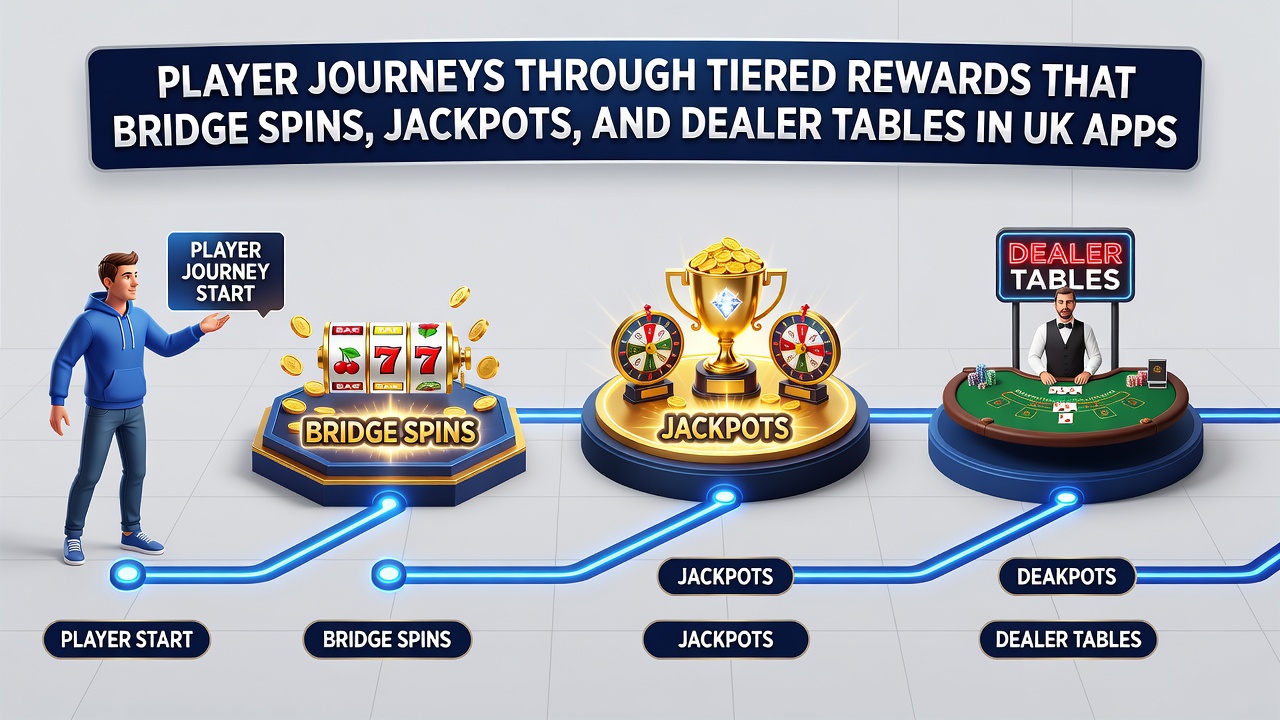
 Data from industry reports shows that many UK mobile casino applications now structure player progression through layered incentive systems. These systems start with basic slot spins and extend rewards into jackpot pools while also unlocking access to table games and live dealer environments. Observers note that such designs encourage users to move between different game types rather than remaining in isolated categories. Players typically begin at entry levels where free spins on slot titles accumulate points toward higher tiers. Once certain thresholds are reached, the same points convert into jackpot entries or bonus credits usable on roulette and blackjack tables. This conversion happens automatically in most applications, and it creates continuous movement across game categories without requiring separate logins or menu switches. Studies indicate that the average session length increases when rewards bridge multiple formats. A user who starts with 50 free spins on a video slot might earn enough loyalty currency to enter a progressive jackpot draw, and that same balance can later fund a live dealer blackjack round. The mechanics rely on unified point ledgers that track activity across reels, card tables, and wheel-based games. What's interesting is how mobile interfaces display these journeys in real time. Progress bars update after each spin or hand, and they show the distance to the next tier where jackpot multipliers or table game cashback become available. Developers integrate these displays directly into the main lobby so users see connections between game types without leaving the current screen. One documented pattern involves players who complete slot-based challenges and then receive invitations to live dealer rooms. The invitations often include matched deposit offers that apply specifically to table games, which extends the reward value beyond the initial spins. Figures from European operators reveal that roughly 35 percent of users who accept such cross-game offers return within the same week to claim further tier benefits. November 2026 marks the scheduled rollout of updated mobile frameworks that standardize how loyalty points transfer between jackpot systems and live dealer tables. Several major UK-licensed applications plan to align their backend systems with these changes, allowing seamless movement of bonus funds from slot wins into roulette side bets or blackjack insurance options. The updates also include clearer tracking of how jackpot contributions from table play feed back into slot-specific prize pools.
 Research from the European Gaming and Betting Association highlights that cross-format reward structures have grown steadily since 2023. EGBA reports document a rise in applications that link progressive jackpots to table game activity, noting that users who engage with multiple categories generate higher overall transaction volumes. The data covers operators across several member states and focuses on technical integration rather than individual outcomes. Another layer appears in how daily and weekly missions span different game families. A mission might require 100 slot spins followed by 20 hands of live dealer poker, with completion unlocking a shared jackpot ticket. This approach keeps activity distributed and prevents concentration in any single vertical. Operators track completion rates through centralized dashboards that update across both iOS and Android versions of their apps. Those who've examined user flow data observe that players often follow predictable routes once they reach mid-tier status. They might alternate between high-volatility slots for jackpot accumulation and lower-stakes table games for steady point generation. The tier system rewards both patterns by offering separate multipliers that stack when users combine activity types within the same calendar week. Technical implementations vary but commonly use API connections between slot engines, jackpot servers, and live dealer platforms. These connections ensure that a win on one side immediately reflects in the player's overall loyalty balance, which then determines eligibility for the next reward layer. Mobile developers test these links extensively to maintain stability during peak evening hours when cross-game activity peaks. A separate report from the Canadian Centre on Substance Use and Addiction examines similar reward structures in regulated markets and finds that unified point systems can influence session distribution across game types. The CCSA analysis draws on anonymized transaction records and shows measurable shifts when operators introduce tiered bridges between spins and table play. Applications continue to refine notification systems that alert users when their current tier unlocks new jackpot access or table game bonuses. Push messages link directly to the relevant game lobby section, reducing friction in the transition from slots to dealer tables. This feature appears most frequently in applications that operate under multiple European licences and must accommodate varying player preferences. Conclusion
The structure of tiered rewards in UK mobile casino apps demonstrates clear technical and operational patterns that connect slot spins with jackpot opportunities and dealer table access. Data from multiple sources confirms ongoing development of these systems, with further standardization expected by late 2026. Players encounter these pathways through automated point tracking and cross-game missions that maintain activity across distinct categories without requiring manual transfers.
Data from industry reports shows that many UK mobile casino applications now structure player progression through layered incentive systems. These systems start with basic slot spins and extend rewards into jackpot pools while also unlocking access to table games and live dealer environments. Observers note that such designs encourage users to move between different game types rather than remaining in isolated categories. Players typically begin at entry levels where free spins on slot titles accumulate points toward higher tiers. Once certain thresholds are reached, the same points convert into jackpot entries or bonus credits usable on roulette and blackjack tables. This conversion happens automatically in most applications, and it creates continuous movement across game categories without requiring separate logins or menu switches. Studies indicate that the average session length increases when rewards bridge multiple formats. A user who starts with 50 free spins on a video slot might earn enough loyalty currency to enter a progressive jackpot draw, and that same balance can later fund a live dealer blackjack round. The mechanics rely on unified point ledgers that track activity across reels, card tables, and wheel-based games. What's interesting is how mobile interfaces display these journeys in real time. Progress bars update after each spin or hand, and they show the distance to the next tier where jackpot multipliers or table game cashback become available. Developers integrate these displays directly into the main lobby so users see connections between game types without leaving the current screen. One documented pattern involves players who complete slot-based challenges and then receive invitations to live dealer rooms. The invitations often include matched deposit offers that apply specifically to table games, which extends the reward value beyond the initial spins. Figures from European operators reveal that roughly 35 percent of users who accept such cross-game offers return within the same week to claim further tier benefits. November 2026 marks the scheduled rollout of updated mobile frameworks that standardize how loyalty points transfer between jackpot systems and live dealer tables. Several major UK-licensed applications plan to align their backend systems with these changes, allowing seamless movement of bonus funds from slot wins into roulette side bets or blackjack insurance options. The updates also include clearer tracking of how jackpot contributions from table play feed back into slot-specific prize pools.
Research from the European Gaming and Betting Association highlights that cross-format reward structures have grown steadily since 2023. EGBA reports document a rise in applications that link progressive jackpots to table game activity, noting that users who engage with multiple categories generate higher overall transaction volumes. The data covers operators across several member states and focuses on technical integration rather than individual outcomes. Another layer appears in how daily and weekly missions span different game families. A mission might require 100 slot spins followed by 20 hands of live dealer poker, with completion unlocking a shared jackpot ticket. This approach keeps activity distributed and prevents concentration in any single vertical. Operators track completion rates through centralized dashboards that update across both iOS and Android versions of their apps. Those who've examined user flow data observe that players often follow predictable routes once they reach mid-tier status. They might alternate between high-volatility slots for jackpot accumulation and lower-stakes table games for steady point generation. The tier system rewards both patterns by offering separate multipliers that stack when users combine activity types within the same calendar week. Technical implementations vary but commonly use API connections between slot engines, jackpot servers, and live dealer platforms. These connections ensure that a win on one side immediately reflects in the player's overall loyalty balance, which then determines eligibility for the next reward layer. Mobile developers test these links extensively to maintain stability during peak evening hours when cross-game activity peaks. A separate report from the Canadian Centre on Substance Use and Addiction examines similar reward structures in regulated markets and finds that unified point systems can influence session distribution across game types. The CCSA analysis draws on anonymized transaction records and shows measurable shifts when operators introduce tiered bridges between spins and table play. Applications continue to refine notification systems that alert users when their current tier unlocks new jackpot access or table game bonuses. Push messages link directly to the relevant game lobby section, reducing friction in the transition from slots to dealer tables. This feature appears most frequently in applications that operate under multiple European licences and must accommodate varying player preferences. Conclusion
The structure of tiered rewards in UK mobile casino apps demonstrates clear technical and operational patterns that connect slot spins with jackpot opportunities and dealer table access. Data from multiple sources confirms ongoing development of these systems, with further standardization expected by late 2026. Players encounter these pathways through automated point tracking and cross-game missions that maintain activity across distinct categories without requiring manual transfers.